
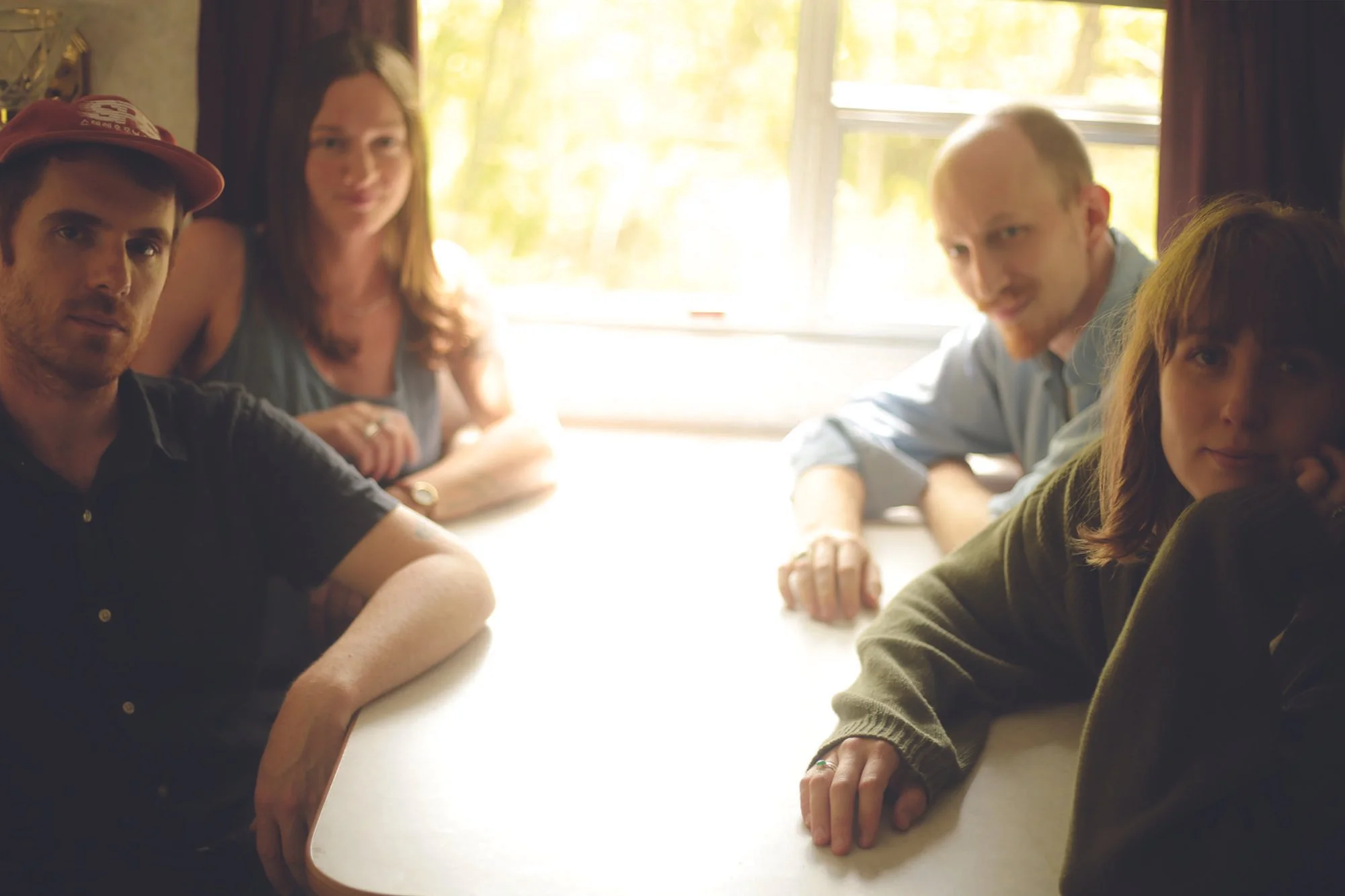
Bio
“An abalone shell is formed of a long organic history, but it also reflects light and gets transfigured by it, with an intricate glow of colors and patterns,” says Upstate’s Harry D’Agostino. “I think that captures the two big themes of our new record: a long and brute history that gets illuminated and transfigured by something new and from without.”
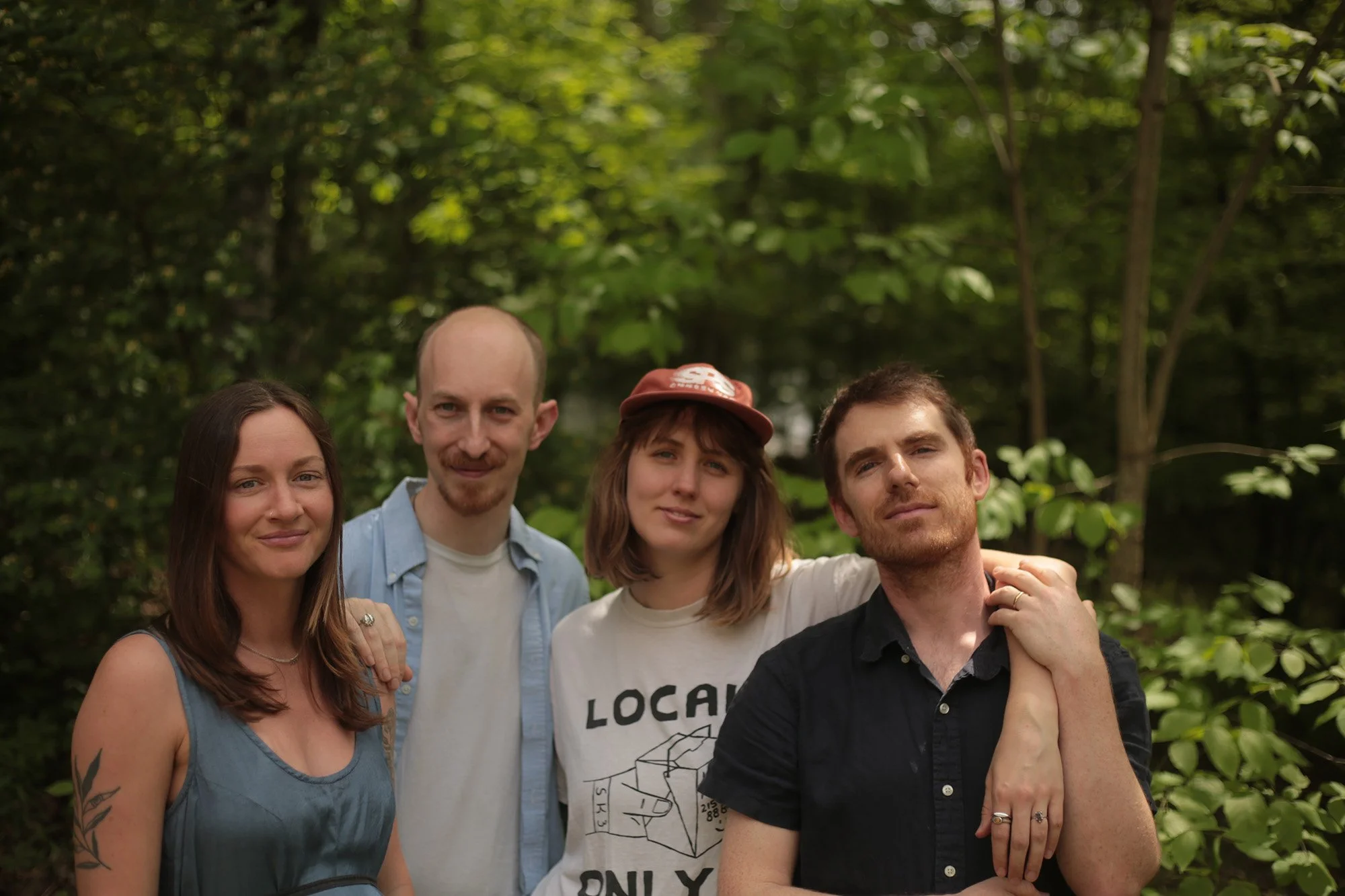
For its fourth studio album, Abalone, Upstate (comprised of founding members Melanie Glenn, Mary Webster, and Harry D'Agostino, who formed the band as college students and went on to build a loyal nationwide fanbase, alongside newest member Dylan.
McKinstry, who joined in 2019) draws on the best of what has marked the band in all its many eras. They revive their noted three-part harmonies, this time with McKinstry adding a male voice to the mix. D’Agostino, most often on upright bass, shapes the band’s rhythms to swing. While various colors from instruments like clarinet, mandolin, melodica and organ heighten the emotion each song delivers. Most importantly, Upstate brings an even more seasoned dedication to writing and performing songs of lasting value.
“I think what keeps us going after all these years is our collective love of sculpting songs out of the ether and allowing each of our strengths to shine through both in the writing and recording process, as well as live on stage," says Webster. "Upstate makes good, human music; what translates in our songs is something nostalgic or reminiscent of what people have gone through in their own lives.”
True to that ideal, Upstate recorded Abalone live in the studio directly to tape, capturing the purest distillation yet of both the band's collaborative songwriting and elemental sound. The album's central themes of time and light, a reflection inspired by all four members stepping into adulthood through various stages of marriage, parenthood, and relocation, were well served by the purity of an analog approach.
"It’s easy to get carried away over-polishing and under-committing with all of the technology available in modern recording, and we wanted something less labored-over and less perfected, which felt like a more accurate sonic representation of our lives,” says McKinstry. “For this record, it occurred to us that Upstate’s musical fingerprint is, at its core, how we sound and how the music feels when we play shows. This led us to seek a studio experience that would do away with endless possibilities for revisions and redoes, and just capture what we sound like as a band.”
Opening with the golden acoustic beauty of “Corner” and the jaunty sass of “Slow Down,” Upstate quickly unveils the themes explored over the course of the album's ten songs. The former dances with uncertainty as time marches on ("The ebbs and flows come and go, taking with them more unknowns"), while the latter acts as a lightning bolt of inspiration imploring a different approach in an increasingly cruel world: “Honey better slow down, better slow down, 'cause we're staring at the same red light together now.”
Another standout, "Circumstance," is built upon an earthy electric guitar figure that would sound equally at home on a Big Thief record as it would a long lost Tom Petty classic. The track finds Glenn singing of remorse and disillusion, before coming to terms with acceptance, and the need to persevere. "Sometimes life can feel completely out of your control, and for the most part it is, but it’s what you do with the hand you’ve been dealt that can shape your outcome into something beautiful," says Glenn. "The song, 'Circumstance,' is a look into those moments in life that feel the hardest. When your foundation is cracked and you need to start again. It’s a song to remind people to keep hope close during hard times, which we all know takes a lot more effort than it sounds.”
As Abalone unfolds, concepts of time and light are explored through character sketches like "Adrianne," an enlightened soul lost to the ages whose identity is never revealed, allowing the listener to bring their own imagination to the song: "Adrianne, what do you do with time? How do you make it rhyme?" Later still is "Louie," an individual so down on his luck — not least from having suffered two strokes — yet given grace by a corner cashier who sees his life as a miracle, illuminating the ideal that if we want love, we must submit to “the weight of being known.”
The profound cosmic folk of "Someone To Save" was hinted at on Upstate's previous album, You Only Get A Few, but here its gorgeous harmonies and delicate fingerpicked acoustic guitar become a fully realized voice in Upstate's oeuvre. Its words are an aching plea for redemption. "Mistakes are not only necessary to becoming, but imperative to belonging," says McKinstry. "Life without asking for help, without asking questions, is one where you’re less inclined to reinvent yourself. 'Someone To Save' is about messing up, and trying my best to move ahead, trying to find serenity in the chaos.”
And so Abalone finds Upstate searching, seeking, and growing into its second decade as a band. Once praised for containing “not only the serpentine sibling harmonies of the Roches, but of the Andrews and Boswell Sisters” (Chronogram) and likened to Lake Street Dive and “Manhattan Transfer with a touch of Loretta Lynn,” (Alongside Your 78s), on these ten songs the band defies comparisons in favor of its own identity, its own confidence, its own maturity. As Webster sees it: “This album feels like a true letting go and caring less about perfection and production. The process of recording and mixing to tape requires a 'that was the take' attitude. Very few, if any, tweaks, takes, and options for minutiae existed while recording and mixing this record. It made us accept imperfection and rawness in a way we have never had to before.”
D'Agostino concludes: "There's a consistent theme of light, of an illumination bringing a kind of sensibility to circumstance. And likewise a theme of time, personal histories leaving a kind of crooked trail that we might only see for what it is when it's in the rearview. It's fitting for us now to kind of reappraise the past in the light of where it's brought us. But mainly we just hope people will love and resonate with the songs, and even that they might draw something from them that we hadn't anticipated."